


Research
Molecular Mechanisms of Environmental Adaptation in Photosynthetic Organisms
Photosynthetic organisms grow while adapting to constantly changing environmental conditions, maintaining photosynthetic efficiency as high as possible. Our research aims to elucidate the underlying mechanisms of this adaptation at the molecular level. Based on the knowledge obtained through these studies, we are also advancing applied research aimed at helping realize a decarbonized society.

A Novel Intracellular Signaling Mechanism Mediated by Reactive Sulfur Species
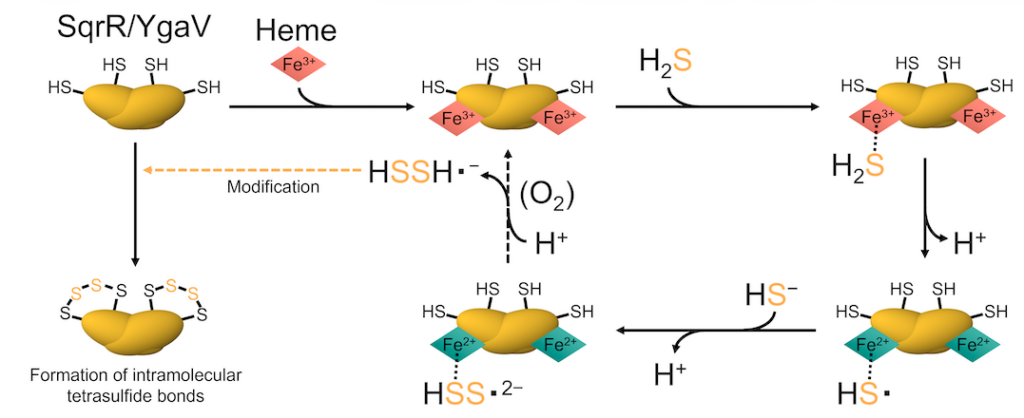
Reactive sulfur species, molecules containing chains of sulfur atoms, have recently attracted considerable attention as highly redox-active molecules that are essential for maintaining cellular functions. Using photosynthetic bacteria and onion pathogens, we are conducting research aimed at elucidating the intracellular signaling mechanisms mediated by these molecules.
Research on the Evolution of Photosynthesis
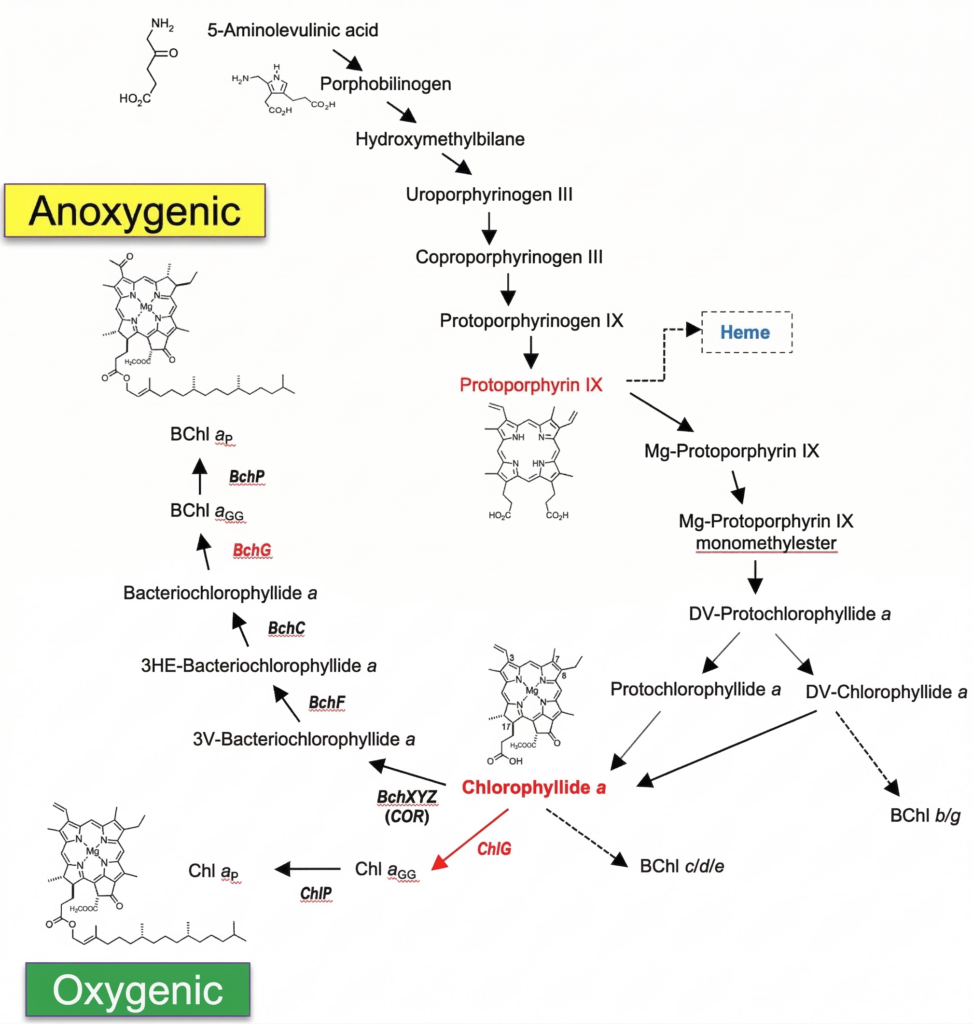
Photosynthesis is thought to have evolved from anoxygenic photosynthesis, which uses substances such as hydrogen sulfide as electron donors, to oxygenic photosynthesis, which uses water as the electron donor. The emergence of oxygenic photosynthesis had a profound impact on the global environment. However, the process by which it evolved remains poorly understood. Using bacteria that perform anoxygenic photosynthesis as model organisms, we are conducting research to experimentally reconstruct the evolutionary process that led to oxygenic photosynthesis.
We are also investigating how nitrogenase, the enzyme responsible for fixing atmospheric nitrogen, was acquired and evolved in cyanobacteria. In the future, this research may contribute to the development of technologies that enable plants to grow by fixing nitrogen on their own.